Affordable Home Improvement Tips That Are Worth Doing First
The cheapest work is the work done in the right order. Water first, air second, surfaces last. Anything installed on top of an unsolved leak is money spent twice, and that single rule saves more than every discount code ever issued.
In a cold-climate home, start by walking the attic, basement, rim joists and service openings to map where air moves between conditioned and unconditioned space. Plan the scope so the air barrier can be inspected before insulation covers it while keeping ventilation, moisture movement and safe access in view. The cold climate air sealing planning presents that sequence as a starting point for discussion with a contractor and notes habits such as drying laundry indoors that add moisture to rooms with reduced air exchange.
Published Updated 10 min read
Most regret in home improvement is not about the choice of tile. It is about order. A kitchen installed over a leaking supply line, a floor laid on a damp slab, insulation blown into an attic that was never air sealed: in each case the work was competent and the sequence was wrong, and the sequence is what makes it cost twice.
Rule one: water first
Water is the only thing in a house that damages every other system. It rots framing, ruins finishes, feeds mould, corrodes fasteners and attracts insects. It is also, at the entry level, remarkably cheap to control.
- Clear the gutters and check the joints. An overflowing gutter delivers roof water directly to the foundation, which is the single most common source of a wet basement.
- Extend the downspouts. Getting the discharge several feet away from the wall is an afternoon and a few fittings.
- Fix the grading. The International Residential Code asks for the ground to fall away from the foundation, six inches within the first ten feet where conditions allow. Soil settles against a house over the years, and reversing that fall is soil and a rake.
- Find the small leaks. Under sinks, behind the dishwasher, at the water heater, at supply valves. A slow leak is a large repair with a delay fuse.
- Look at the roof from the ground and the attic with a flashlight. The signals are set out in the roof replacement guide.
Rule two: air second

Once water is under control, the next best return in almost every American house is air sealing followed by attic insulation. The Department of Energy consistently puts that pair at the top of its low-cost energy recommendations, and the order within the pair matters: insulation slows heat, it does not stop air, so blowing insulation over unsealed penetrations buries the problem.
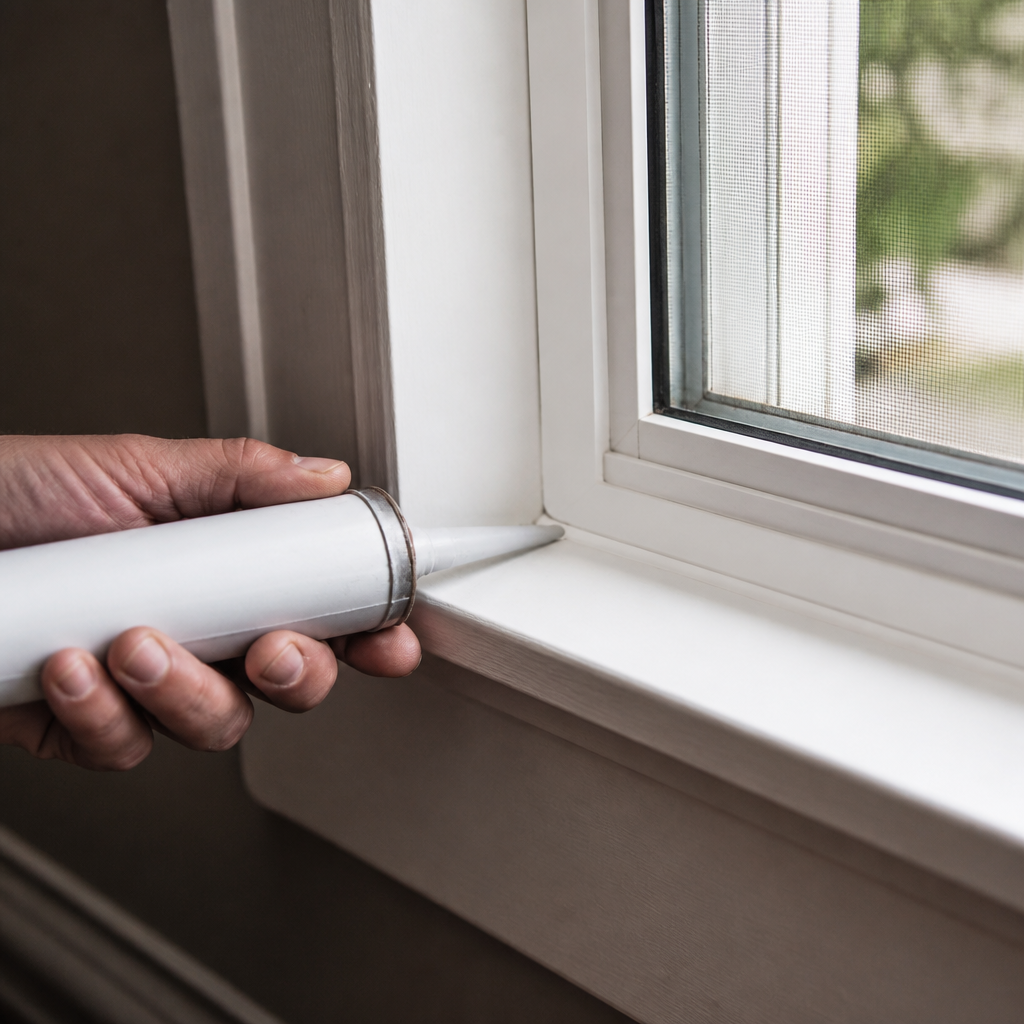
- Caulk and weatherstrip around windows, doors and trim.
- Seal the attic hatch and weatherstrip it, which is often the largest single hole in the ceiling plane.
- Seal penetrations at the top plates, around flues to their required clearances, and at plumbing and wiring runs.
- Seal the rim joist in a basement or crawl space.
- Then insulate, to the level recommended for your climate zone.
Rule three: surfaces last
Paint, floors, tile, trim and cabinets are the visible part and the part that gets the enthusiasm. They are also the part that has to be removed when something behind them needs attention. Doing them last is not a counsel of patience, it is arithmetic.
Every dollar spent on a finish over an unsolved problem buys the finish twice and the problem once.
The whole argument for order, in one line
The cheap wins with a real return

- Set the water heater to 120 degrees Fahrenheit. The Department of Energy recommends it: lower standby losses, less scald risk, and it costs nothing to change.
- Replace remaining incandescent and halogen lamps with LEDs, starting with the fittings that are on the longest.
- Fit WaterSense labelled fixtures when something needs replacing anyway. The Environmental Protection Agency programme covers showerheads at no more than 2.0 gallons per minute, bathroom faucets at no more than 1.5 gallons per minute, and toilets at no more than 1.28 gallons per flush.
- Change the furnace or air handler filter on a schedule. A blocked filter costs energy and shortens equipment life.
- Use thermostat setbacks for the hours the house is empty or asleep.
- Fix running toilets and dripping taps immediately. A running fill valve is the most expensive small fault in a house.
- Fit door sweeps. Cheap, quick, and they close a gap that both air and insects use, as described in the pest control guide.
Buy, rent or hire
| Category | Decision | Reasoning |
|---|---|---|
| Cordless drill, hand tools, levels, a decent tape | Buy once, buy properly | Used constantly, and cheap versions waste more time than they save |
| Plate compactor, tile saw, floor sander, pressure washer | Rent | Used for days across a lifetime, and stored for years |
| Drain camera | Rent | One inspection changes what you ask every contractor afterwards |
| Scaffold, lifts, trench shoring | Hire the crew that owns it | The equipment is the least difficult part of using it safely |
Where DIY saves and where it costs
Labour-heavy, low-risk, low-consequence work is where a homeowner captures the most value: painting, caulking, weatherstripping, trim, hardware, mulching, fitting shelving, replacing a faucet, changing light fittings.
The reliably expensive DIY jobs share a profile: they are permitted, they are hidden once complete, or the failure mode is severe. Gas work, service panel work, structural changes, roofs, main drains and anything involving a trench. The sewer example is the clearest, and it is set out in the dangers of DIY trenchless sewer repair.
The permit question
A permit looks like a cost and a delay. What it actually buys is an independent set of eyes at the stages where a mistake is about to be covered up, plus a record that the work exists. Unpermitted work has a way of resurfacing at the worst moment, usually during a sale, sometimes during an insurance claim.
The practical rule: ask the building department what needs a permit before starting, not after. The question is free and the answer is local.
Before you spend on paint or hardware, it helps to know what other owners have already worked through. One guide in the library points to a French blog on home repairs, which covers beginner repairs, window insulation, and no-knead bread. The insulation notes matter most in an old house: air leaks at frames and sills cost more than any fixture you can swap. Read the guide first, then decide which job on your list earns the first weekend.Sequencing a room
- Fix leaks and any water source, then let things dry and verify.
- Structural changes and framing.
- Rough plumbing, electrical and mechanical, with inspection where required.
- Insulation and air sealing.
- Drywall, then priming.
- Flooring or trim, in the order the flooring type requires: floating floors usually go in before the baseboard, and glue-down or nailed floors often follow it.
- Painting, final fittings, hardware.
The one step people reverse is the flooring and the trim, and the answer genuinely depends on the floor. It is worth confirming before ordering anything, using the comparison in the home office flooring guide.
For a cheap LED that actually lights a room, ignore the watt number printed on the box and read the lumens. Watts only tell you what the bulb draws; brightness is lumens, and a 9 W LED at 800 lumens replaces an old 60 W incandescent in a hallway or a small kitchen. Warm white near 2700 K suits living space, cooler white near 4000 K suits a workbench or a stairwell. Buy one bulb first, run it a week, then buy the rest. For the details, see choosing an LED by lumens.
Cheap that is not cheap
- The lowest bid on hidden work. On anything that will be covered up, the low bid is usually buying less preparation, and preparation is the part you are actually paying for.
- The cheapest fastener. Non-galvanised screws outdoors and undersized anchors indoors are the two most common false economies in a hardware basket.
- Skipping the base. In hardscape, in flooring, in roofing, the layer nobody sees is the layer that determines the life of the layer everybody sees. That is the argument behind the retaining wall guide and the paver guide alike.
- Buying finish materials early. Materials bought before the room is ready get damaged, get discontinued mid-project, or turn out to be the wrong quantity.