The Pros and Cons of Trenchless Sewer Pipe Replacement
Trenchless work rebuilds a sewer lateral through two small access pits instead of a trench across the yard. It is faster and less destructive, it is not automatically cheaper, and there is a specific list of conditions under which it simply cannot be done.
Published Updated 10 min read
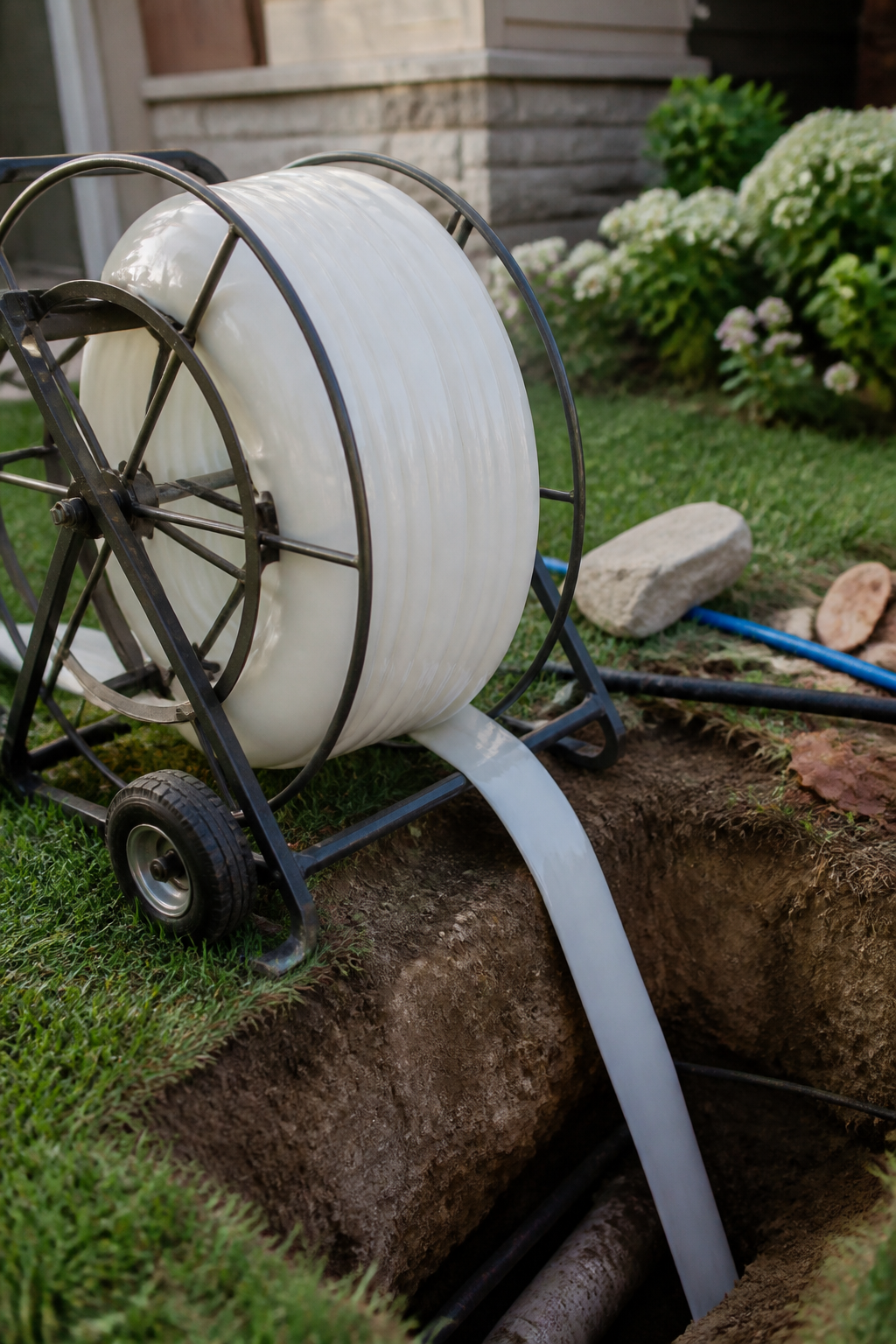
A sewer lateral is the private pipe that carries waste from the house to the public sewer or the septic tank. When it fails, the traditional fix is to open a trench along its whole length. Trenchless methods rebuild the same pipe through an access pit at each end, which is why a front lawn, a mature tree or a stamped concrete driveway can survive the repair.
The two methods that matter
- Cured in place pipe, or CIPP
- A flexible liner saturated with resin is pulled or inverted into the old pipe, pressed against the wall and cured hard. The result is a jointless pipe inside the old one. The main American standards are ASTM F1216 for inversion, ASTM F1743 for pull-in-place, and ASTM F2019 for glass-reinforced liners cured with ultraviolet light.
- Pipe bursting
- A bursting head is pulled through the old pipe, splitting it outward while towing a new pipe, usually high density polyethylene, into the space behind it. The old pipe becomes part of the surrounding ground.
- Slip lining
- The older cousin: a smaller new pipe pushed inside the old one and grouted. Simple, but it gives up more diameter than CIPP, so it is now uncommon on residential laterals.
The choice between them is not a preference. Lining repairs a pipe that still holds its shape and its line. Bursting replaces a pipe that does not, and it is the only one of the two that can increase the diameter.
What has to happen before any quote
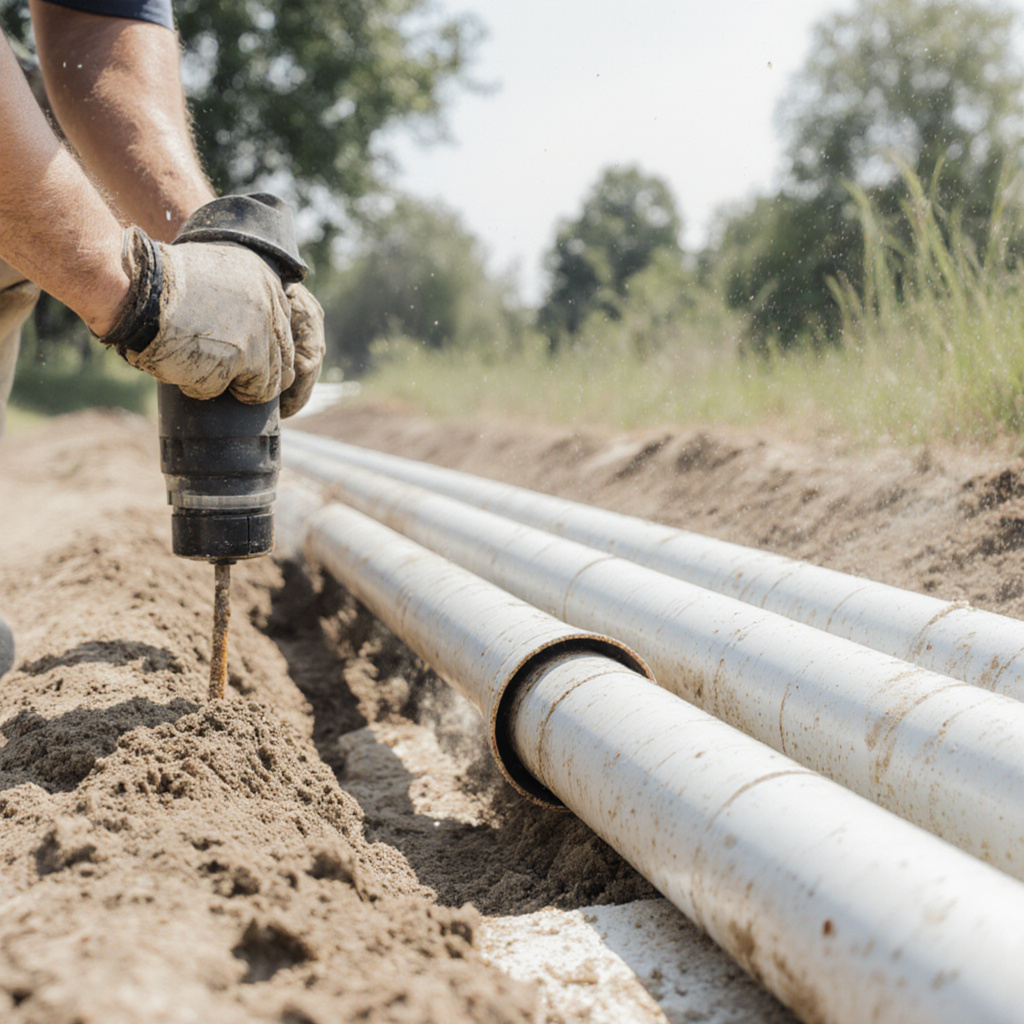
Nobody can price trenchless work honestly without two things: a camera survey of the whole lateral, and a locate that puts the defects on the ground with distances and depths. Any quote given without both is a guess wearing a number.
- A recorded video, with footage counters, that you keep a copy of.
- The location and depth of each defect, and of every branch connection.
- The pipe material and diameter, and where they change.
- Where the property line and the public connection sit, because that decides who pays for what.
The case for trenchless
- The surface survives. Two pits instead of a trench means driveways, mature trees, retaining walls and paving usually stay where they are. On a property with expensive hardscape, that difference dominates everything else.
- It is quick. Many residential laterals are done inside a working day, against several days for open cut plus restoration.
- A liner has no joints. Joints are where roots get in and where groundwater infiltrates. Removing them removes the failure mechanism rather than the symptom.
- The new surface is smoother. A cured liner has a lower friction coefficient than aged clay or corroded cast iron, which offsets much of the diameter it takes up.
- Bursting can upsize. If the lateral was undersized or you are adding fixtures, bursting is the method that allows a larger pipe.
The case against
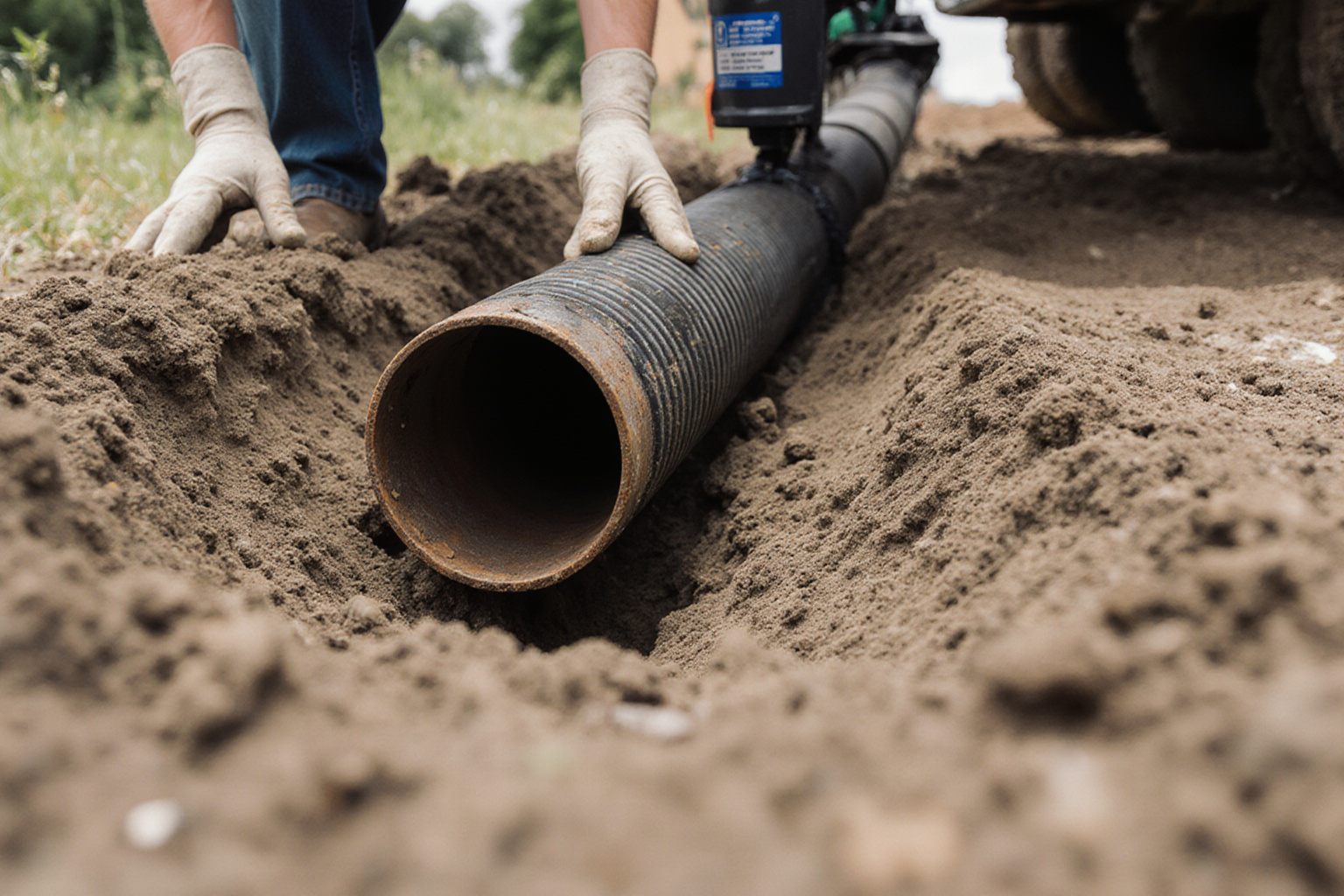
- Diameter is lost with lining. Usually a modest amount, and usually offset by smoothness, but it is real and it matters on a pipe that was already marginal.
- Branch connections must be reinstated. After lining, every lateral connection is covered and has to be reopened, normally with a robotic cutter. A missed or partly opened connection is a serious defect and it is invisible from inside the house.
- It is still excavation. The pits are small, but they are holes, they need to be safe, and they are usually in the worst possible place.
- Fewer contractors, less price competition. The equipment is expensive, so a rural market may have one or two firms.
- The quality is buried. With open cut you can see the new pipe in the trench. With trenchless the only proof is the post-installation video, which is why you must insist on one.
Trenchless work is only as good as the camera survey that preceded it and the camera survey that follows it.
Both belong in the contract, not in the conversation
When trenchless is ruled out
These conditions send the job back to open cut, or to a hybrid where one section is dug and the rest is lined.
- Collapsed sections. A liner needs a host pipe to press against. If there is no pipe left, there is nothing to line.
- Severe back-pitch or bellies. Lining a pipe that runs uphill or holds water reproduces the fault in a new material. Grade problems need re-laying.
- Major offsets at joints. Past a certain misalignment the liner cannot follow the bore, and the bursting head can leave the line.
- Too many or too tight bends. Every bend costs; a stack of them can end the method.
- The pipe cannot be located or accessed. No locate, no launch pit, no job.
- Crushed or heavily deformed sections where the cross section is no longer round enough for the liner to seat.
What actually drives the cost
This site does not quote prices, because a sewer lateral price is site specific to the point of being meaningless as an average. What is useful is knowing which variables move the number, so you can read two quotes against each other.
| Variable | Why it matters |
|---|---|
| Length of the lateral | Liner and labour scale directly with it |
| Depth | Deeper pits mean more excavation, more shoring, more time |
| Access to the launch pit | Equipment that cannot reach the pit changes the whole method |
| Number of bends and connections | Each one is a decision point and a reinstatement |
| Existing cleanouts | A usable cleanout can remove an entire excavation |
| Surface restoration | Grass, asphalt, concrete and stamped concrete are four different budgets |
| Permits and inspection | Fees, and the time spent waiting for a hold point |
| Public versus private portion | Some of the run may not be yours to repair or to pay for |
Permits, inspection and who owns which part
Sanitary sewer work is permitted work in most United States jurisdictions, and inspections are usually required at defined stages. That is not bureaucracy for its own sake: an unpermitted lateral repair can surface later during a property sale, and it is exactly the sort of thing a buyer's inspector asks about.
A trenchless replacement leaves the yard intact, but it also leaves the owner with a shorter list of things to inspect. The pipe is new, the joints are fused, and the old clay or cast iron stays in the ground where it was. What the job does not settle is the rest of the house, and a guide on this site covers water pipe shops and rules, including what a tobacco shop sells, how water pipe tobacco differs from cigarettes, and why the object itself carries a documented history. Read it the same way you read a sewer scope: slowly, and with the parts named.Ownership of the lateral differs by city. In many places the homeowner owns the pipe from the house to the main, including the section under the street; in others the responsibility changes at the property line or at the curb. Ask the utility, in writing, before agreeing to repair a length that may not be yours.
Trenchless replacement settles the pipe, not the rooms above it. Once the line is in and the yard is put back, the work moves indoors, where the same question of material comes up again: which species to use, how the joints are cut, and what finish goes on top. The guide on joints and finishes for wood covers exactly that, with density and hardness figures that decide where each board belongs. Read it before you order trim or shelving for the rooms the sewer work disturbed.What to ask for in writing
- The pre-work camera survey, with footage counters, as a file you keep.
- The method proposed, and why, referenced to the defects found.
- The liner or pipe material and its standard, and the manufacturer data sheet.
- The post-installation camera survey, including every reinstated connection.
- The permit number and the inspection sign-off.
- The warranty: length, what it covers, and who honours it if the contractor closes.
If the diagnosis points to root intrusion, read why tree roots damage sewer lines before deciding between cutting and lining, because the two answers have very different lifespans. And if you are tempted to do any of this yourself, the hazards of DIY trenchless repair is the page to read first.
Before signing a trenchless replacement quote, ask for a camera inspection of the existing pipe. A camera pushed through a cleanout records the inside of the run: cracks, root intrusions, offsets, and the true diameter. Watch the footage and note the distance markers where defects appear. If the line is collapsed or bellied over a long stretch, lining may not hold; a spot repair can cost less. The recording also sets a baseline for later comparison. For the method and what the images show, see inspecting a drain by camera.